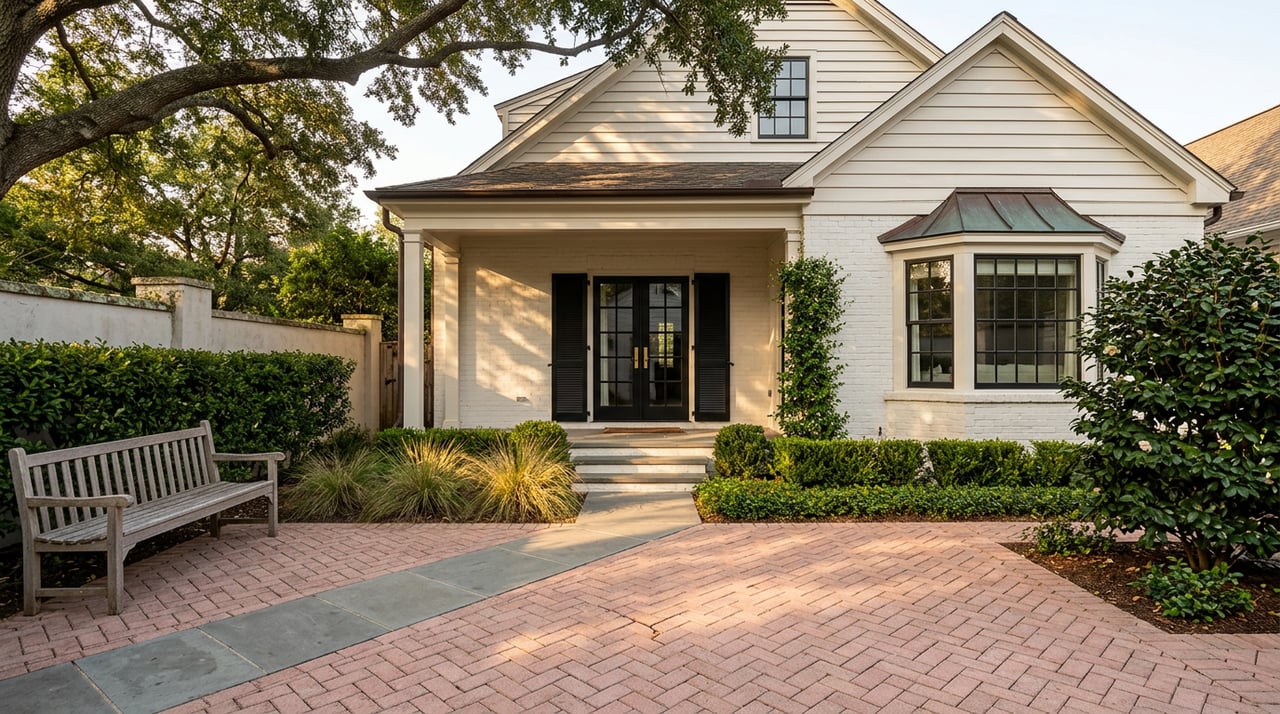
Two listings cross your search results this week. Both are single-family homes on Daniel Island, both priced within a few thousand dollars of each other, both built in the last decade. One sits in Daniel Island Park. The other sits in Codner's Ferry Park. On paper, they read like the same purchase with a different floor plan.
They aren't. By the time you reach the closing table, one of these homes will have cost you thousands of dollars more than the other, and the difference has nothing to do with square footage, lot size, or finishes. It comes down to which of three property owners' associations holds the deed restrictions on the parcel, and what that association charges buyers on the way in.
Daniel Island isn't governed by a single HOA. It runs on three: the Daniel Island Community Association (DICA), the Daniel Island Park Association (DIPA), and the Daniel Island Town Association (DITA). DICA generally covers single-family homes south of I-526, including Codner's Ferry Park and Etiwan Park, and holds responsibility for amenities like the Scott Park Pool, Pierce Park Pool, Edgefield Park Pool, the neighborhood's pickleball and bocce courts, and the Beresford Creek Boat Landing. DIPA covers Daniel Island Park, including Captain's Island, The Retreat, and Nobels Point, generally north of I-526. DITA oversees the business district and most of the island's multi-family development. As of 2026, all three associations operate with fully resident-controlled boards, meaning the people setting next fall's budget are neighbors rather than developer appointees.
That structure sounds like municipal trivia until you look at what each association actually charges.
The fee that changes by a few blocks
Every sale on Daniel Island triggers a Community Enhancement Fee, paid at closing to the Daniel Island Community Fund, a private nonprofit that receives no support from annual assessments and instead runs entirely on this one-time charge. For most of the island, that fee equals half of one percent of the sale price, capped at $7,417. But property in Codner's Ferry Park and Etiwan Park pays a discounted quarter of one percent, capped at the same $7,417.
Two homes at the same price on Daniel Island are not automatically the same purchase. The difference lives in which of three associations holds the deed restrictions.
Run the math at a price point close to where the island trades today. At $1.5 million, the standard 0.5% rate hits $7,500, which gets capped at $7,417. The discounted 0.25% rate on the same sale comes to $3,750. That's a gap of about $3,667, real money that never shows up on a listing sheet and rarely comes up until a buyer's attorney reviews the resale addendum.
The gap isn't fixed. Because the fee caps out at $7,417 regardless of price once you cross roughly $1.48 million at the standard rate, the dollar difference between the two rates actually shrinks as prices climb past that point, and disappears entirely once a Codner's Ferry Park or Etiwan Park sale reaches roughly $2.97 million and hits the same cap from the other direction. In plain terms, the discount is worth the most exactly in the price range where most Daniel Island homes are currently selling, not at the extremes.
The recurring costs a listing sheet doesn't carry
The Community Enhancement Fee is a one-time charge, but it isn't the only place DICA and DIPA diverge. Recent fee schedules show DICA's annual assessment running $947, against $1,074 for DIPA. At resale, DICA charges a capitalization fee of $158, roughly one-sixth of its annual assessment, while DIPA charges $358, close to a third of its own. Both associations also apply a $250 estoppel fee on resale closings, payable to the Town Association, which confirms outstanding balances and pending assessments before a sale can close.
None of these numbers are large on their own. Stacked together, they mean a DIPA buyer is paying more at closing and more every year than a DICA buyer in a comparably priced home, before either of them has repainted a wall.
The obligation that only exists on one side of the boundary
The larger divide isn't a fee schedule. It's membership.
Daniel Island Park property owners automatically receive a Social membership to the Daniel Island Club, and Social membership is available only to Park owners. The Club itself describes membership tiers running from Social through Sports to Full Golf, each with its own dues and, for the golf tiers, a separate initiation deposit. Recent resale disclosure materials for Daniel Island Park have documented a mandatory minimum monthly Club charge near $230, though buyers should confirm the current figure directly with the Club's membership office, since dues are set by the Club and can change independent of the POA's own fee schedule.
A buyer in Codner's Ferry Park, Etiwan Park, or anywhere else under DICA never encounters this line item. It doesn't appear on their resale addendum because it doesn't apply to their parcel. That's the real dividing line on Daniel Island: not price, not proximity to the water, but whether the deed comes attached to a private club membership you're required to carry whether or not you golf.
What this means while you're comparing neighborhoods
Daniel Island's market has been telling a two-part story through 2026. Prices have held near record territory: over the three months ending April 2026, the island's median sale price sat around $1.5 million, essentially flat year over year. But the pace has slowed considerably. Average days on market climbed to 64 in that same window, up from 51 a year earlier. By early August 2026, active listings across the island carried a median list price near $1.58 million with average time on market stretching close to three months, up sharply from the roughly five-week pace many Daniel Island listings saw a year earlier.
That slower pace works in a comparison shopper's favor. A market where homes sit for two to three months instead of selling in a weekend is a market where you have room to request the estoppel certificate before you write an offer, not after. It's a market where asking which association governs a specific parcel, and what that association's current budget looks like, is a reasonable question rather than a deal-killer.
Price per square foot still matters, and waterfront lots on the island carry a real premium, often 50% to 100% above comparable interior lots, reflecting genuine scarcity of marsh and river frontage. But price per square foot was never going to tell you whether you're signing up for a $230 monthly club obligation or a quarter-point discount on your closing fee. Only the parcel's association does that.
A few questions worth asking before you write an offer
Do buyers outside Daniel Island Park ever pay Club dues? No. Social membership at the Daniel Island Club is automatic and required for Daniel Island Park property owners specifically. Homes under DICA, including those in Codner's Ferry Park and Etiwan Park, carry no Club obligation at all.
Is the Community Enhancement Fee negotiable? The rate itself is fixed to the parcel and confirmed in the association's resale disclosure documents. What can be negotiated in the purchase contract is which party, buyer or seller, actually pays it at closing.
Do these fees apply the same way to new construction? The estoppel fee is specific to resale closings. The Community Enhancement Fee and annual assessments apply more broadly, so it's worth confirming the exact disclosure addendum attached to any new-construction contract before assuming the resale numbers transfer directly.
Every one of these figures is set by a board that approves its budget each fall, which means next year's numbers won't be identical to this year's. Confirming the current fee schedule with the specific association before you write an offer isn't a formality. It's the only way to know what you're actually agreeing to pay for a house that, on the surface, looks exactly like the one two streets over.
If you're weighing Daniel Island Park against the south side or Codner's Ferry Park and want the current numbers pulled together for a specific address, Kim Meyer can walk through the association, the fee schedule, and what it means for your closing statement before you're standing in front of one. Let's Connect.